
Dalva: The Long Way Around, the Right Way
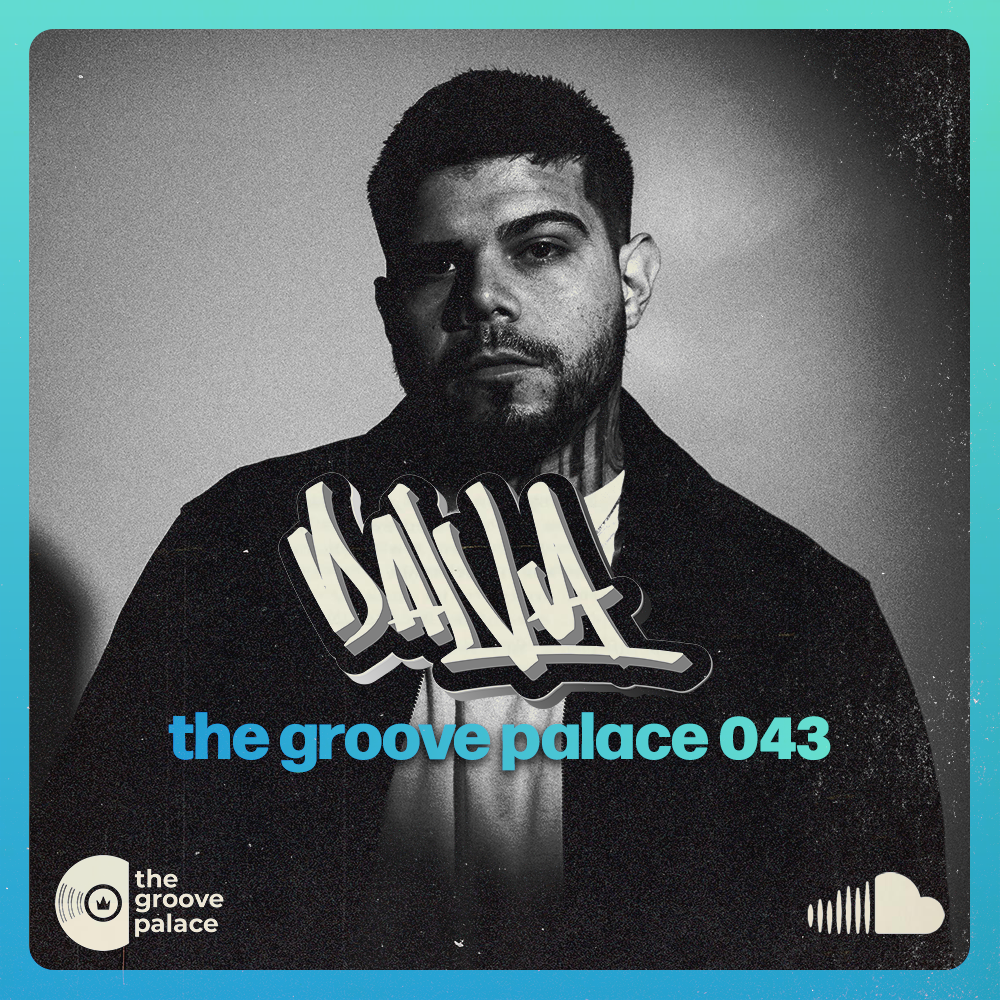
DALVA
Dalva, born Andy Sosa, is a Miami DJ and producer who has spent close to fifteen years learning his craft the slow way. Honduran on his mother's side, Cuban on his father's, he grew up between a Spanish-speaking church and the clubs that taught him house music a few blocks from where he still lives today. His sound is deep, groovy, and stripped back, built on real instruments and a refusal to take the easy route. His TGP043 mix is composed entirely his own unreleased productions, a snapshot of an artist who knows exactly what his pocket is.
Roots in Rhythm
Before the clubs, there was church. Dalva's mother is from Honduras, his father is Cuban, and he was raised speaking Spanish in a "super Hispanic" congregation his mom took him to for years. The music started even earlier than that. "My dad bought me this old Casio piano keyboard, and this was when I was really young, like four or five or six," he recalls. It had drum patterns you could set and keys you could layer over the top. That was the beginning.
By around ten, he was drumming for the church youth group. "When church was over, I would get on the drums, and I always had a pretty good rhythm," he says. A church staffer named Frank noticed and put him on the Friday youth nights. In fifth grade, a teacher he remembers as Mr. T taught the class drums on buckets, street-performer style, and Dalva played a concert on them. He had the ear, too. "If you played something, I could play it for you off rib." The one wall he hit was reading music. He auditioned for a magnet program, played the part he had prepared, then froze when they put sheet music in front of him. He did not get in. The pull stayed anyway.
Crate-Digger Before He Knew It
Long before house, Dalva was a collector. "I would collect CDs," he says. "I had the Eminem CD that first came out, the 50 Cent Get Rich or Die Tryin' CD, a bunch of Linkin Park CDs." He burned his own mixtapes off LimeWire and Rhapsody, listened to "really ghetto music," then went the other direction into rock and metal, Deftones and Iron Maiden and Led Zeppelin, on skate sessions with a friend who later did all his tattoos. Looking back, the through-line is obvious: he was always digging for what was not on the radio, a habit that mapped perfectly onto the underground when he found it.
The Ultra Spark
The door opened at Ultra in 2009, back when the festival was at Bicentennial Park, where the Frost Museum now stands. He was young and brand new to all of it. "I remember seeing Crystal Castles," he says, and Carl Cox, who always had his own stage. He was so new to it all, he watched people using Vicks inhalers and thought they were doing ecstasy. "Those days, bro. Being so naive." After that came a stretch of dubstep, but the thing that stuck arrived a few years later.
Mekka Taught Him House
In 2016 Dalva moved to downtown Miami, the same area he lives in now, two blocks from Space and Mekka. Mekka did the rest. "If you're anybody that is in this scene and you're from Miami, you know about Mekka," he says. He went Thursday through Monday: Thursday and Friday nights, Saturdays at Space, Sunday after-hours, and a "very degenerate" Monday into Tuesday that he describes as a spectacle. "I left the judgment at the door," he says. "The music is what united everybody." The other room at Mekka ran dark minimal techno, the old Marco Carola and Joseph Capriati type of sound, and that is where his ear was set. It still shows. "Even till now, what I'm playing, I play three or four tracks up at the same time. Never less than two."
The Decision
For a while it was a tug-of-war between jobs and the music. The breaking point came in 2018. He had crushed the interview for a job at Truluck's in Brickell, been given a uniform, been told he could start the next day. He went to a friend's house and laid it out: take the job, or fully commit to DJing. "I never even gave back the uniform," he says. "I just started DJing full time." Before that, his steadiest work was a two-year Friday residency at Sergio's Cuban Cafe, playing salsa, merengue, and Bad Bunny for diners on a Behringer mixer and a pair of monitors with no sub. Five hundred dollars a Friday, roughly two thousand a month, on rent of six or seven hundred. After Truluck's, he traded the safe money for two-hundred-dollar gigs that actually moved the Dalva name forward. He calls the full-time leap one of the best decisions he has ever made.
A Sound Built on Real Instruments
Ask where his sound comes from and the answer is tactile. "I love me a good electric piano. I love me a nice pair of chords. And I like a very nice rounded sub bass," he says. He uses the same bass instrument across all his tracks and builds around natural, old-fashioned sounds. He is not interested in shortcuts. "I'm not messing with AI right now," he says. On his record "Ghetto Kids," he and a collaborator ran a vinyl through a turntable into the mixer and into Ableton rather than ripping a sample off YouTube. "We did the work."
That hard-line approach is personal. "My character as a person, I'm a little bit of a hard ass," he says. He runs two miles daily and treats the difficult path as the rewarding one. "The more challenging it is for me, the more rewarding it is." He names Ollie BC, Miguel and Tons, and Fletch as friends who are doing it the old-school way and who trade tricks with him. In the mix, that lineage shows up most clearly in the Miguel and Tons direction.
The 125 Pocket
Dalva does not make peak-time records, and he is intentional about it. "My pocket is 125 BPM," he says. "I love that deep, groovy, stripped-back kind of production. Leaving massive amounts of space and letting everything breathe." That space is also what lets him run three or four tracks at once. His test for himself is simple: if he can make a room move at 125 with very little going on, he knows he is doing something right. "It's very easy to take a track and put it very fast and make somebody wobble. If I can play it at 125 and it makes somebody dance, that means I'm doing something correctly."
Maxed Out: The Next Chapter
The next build is Maxed Out, his party brand, named after his puppy Max. He is launching it with Migs from The Cut out of Austin, Texas, with the first event set for August 27 at Jolene, a Thursday running from 10 into the early morning, with a Brazilian headliner he is not naming yet. He has thrown a party before, years ago, with Slugg on the lineup, but this time the intent is to grow the brand the right way, with everything he has learned since. The longer-term plan is to turn Maxed Out into a label for the large catalog of music he is sitting on.
Final Words
Asked for the one lesson from almost fifteen years in, Dalva does not hesitate. "Don't rush anything. The more you rush it, the more you're not going to get it." He frames it as desperation working against you. "The more you're desperate to do something, the less it's going to come to you. It's just like a girl. The more you like the girl, the less she's gonna like you. I didn't write the rules. I just had to learn it." At 32, he says it is still something he fights. "Take your time. Make sure you're learning and loving the experience. Make sure every lesson learned is going to build the person you're going to be as a DJ." Then, the part that sounds like more than music advice: "It'll happen when it's ready."
His TGP043 mix is that philosophy in audio: patient, stripped back, built by hand, and entirely his own.
Listen to Dalva's full TGP043 mix on The Groove Palace SoundCloud, and read more about his journey at thegroovepalace.com.